
Shanghai Stock Exchange
Asia's largest stock exchange, re-established in 1990.

Wikipedia / Wikimedia Commons
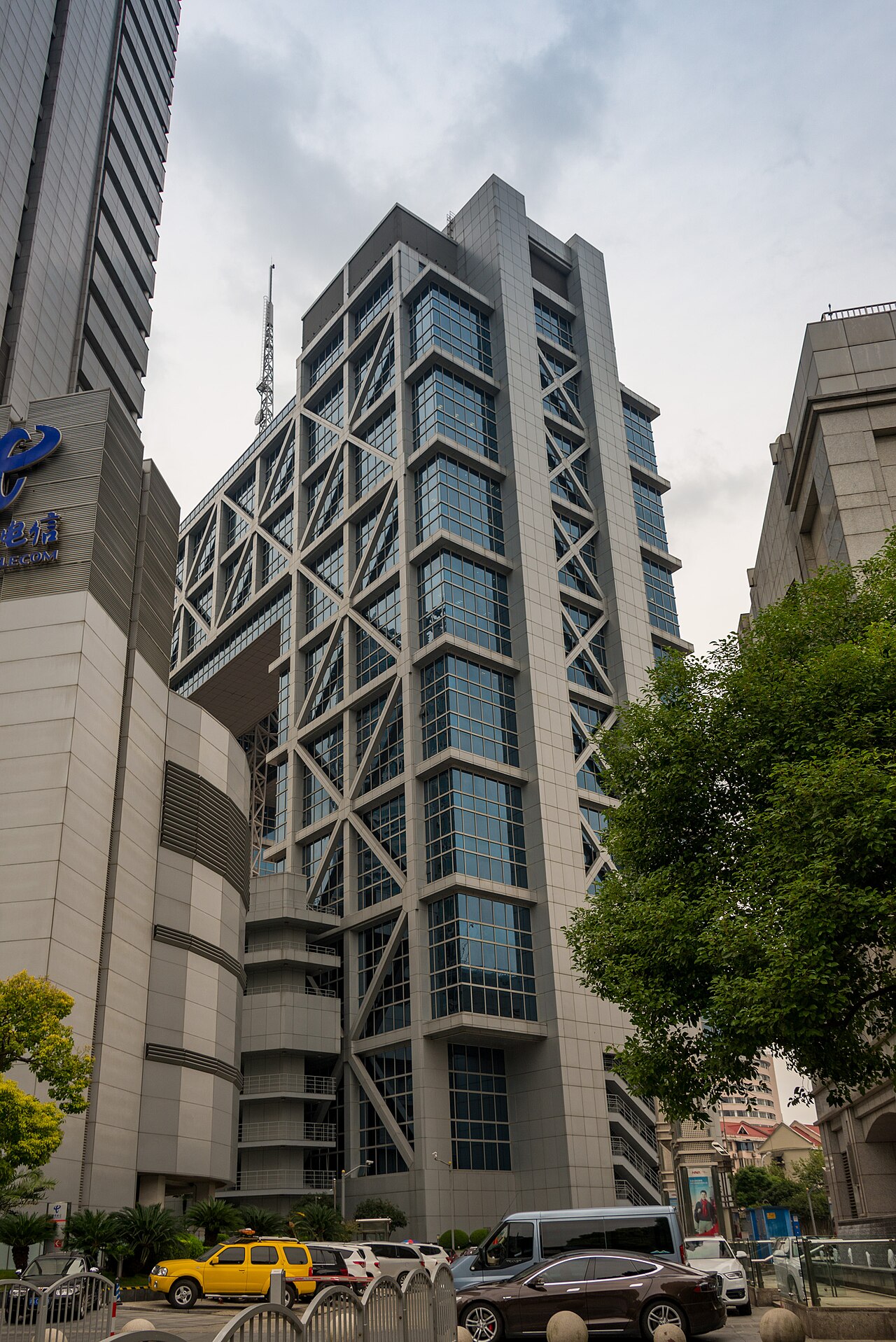
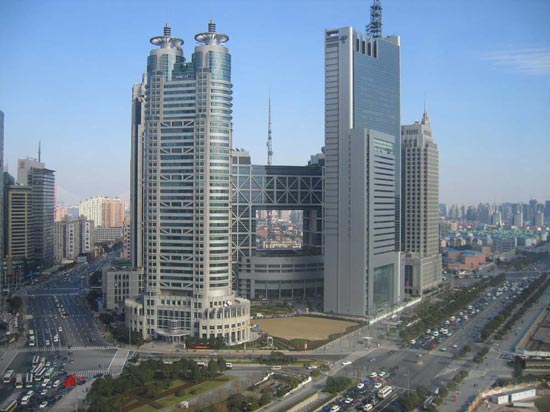
The Shanghai Stock Exchange (SSE) is a stock exchange based in Shanghai, China, and is one of three independently operating stock exchanges in mainland China, alongside the Beijing Stock Exchange and the Shenzhen Stock Exchange. It is the world's third-largest stock market by market capitalization, exceeding $10.21 trillion in May 2026, and is Asia's biggest stock exchange. Unlike the Hong Kong Stock Exchange, the SSE is not entirely open to foreign investors and is often affected by central government decisions due to capital account controls. It is a non-profit organization directly administered by the China Securities Regulatory Commission (CSRC).
- field
- Stock exchange
- nationality
- Chinese
- known_for
- World's third-largest stock market by market capitalization
- re-established
- November 26, 1990
- began_operations
- December 19, 1990
- market_cap
- Over $10.21 trillion (May 2026)
Lore & Background
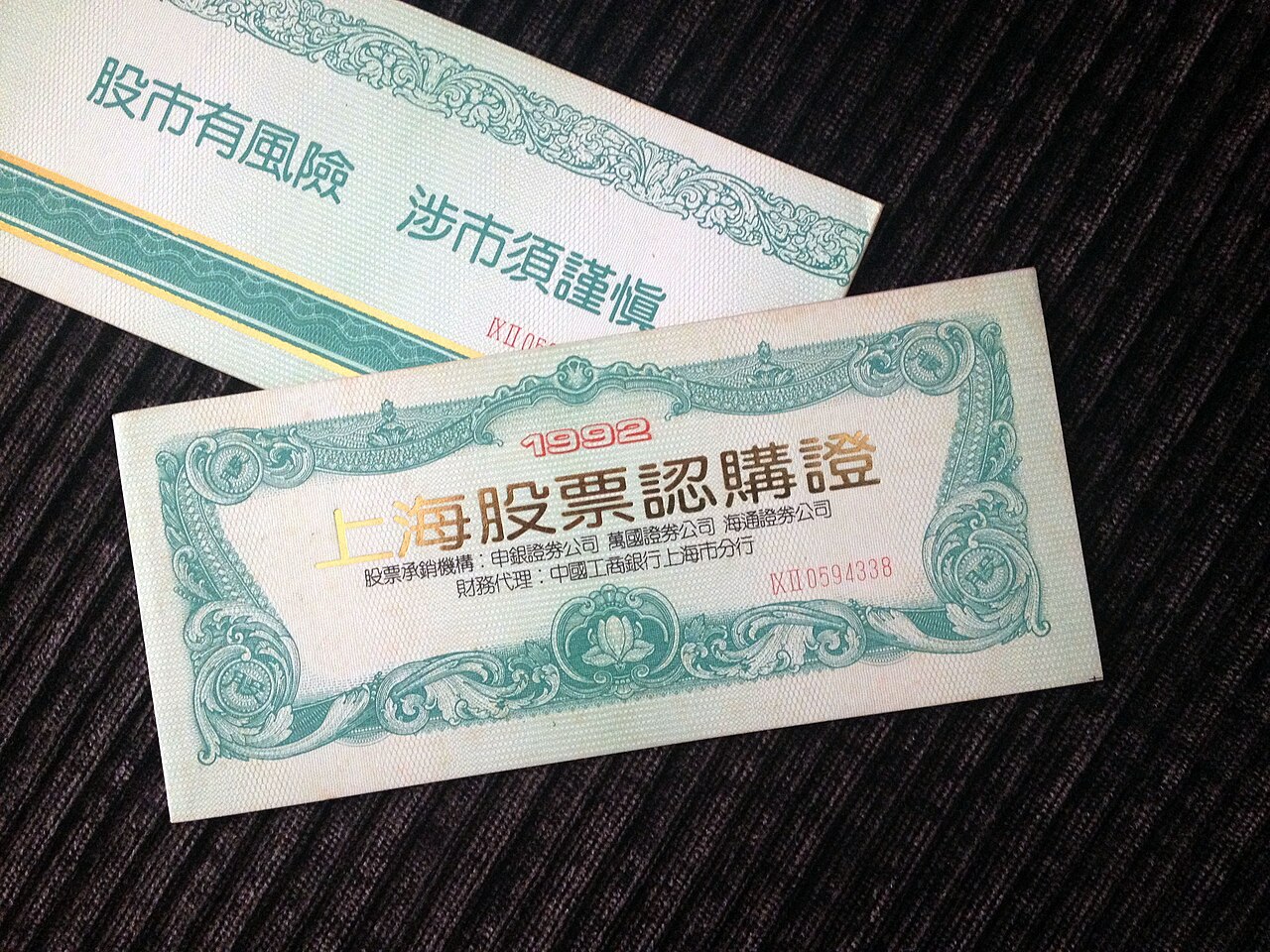
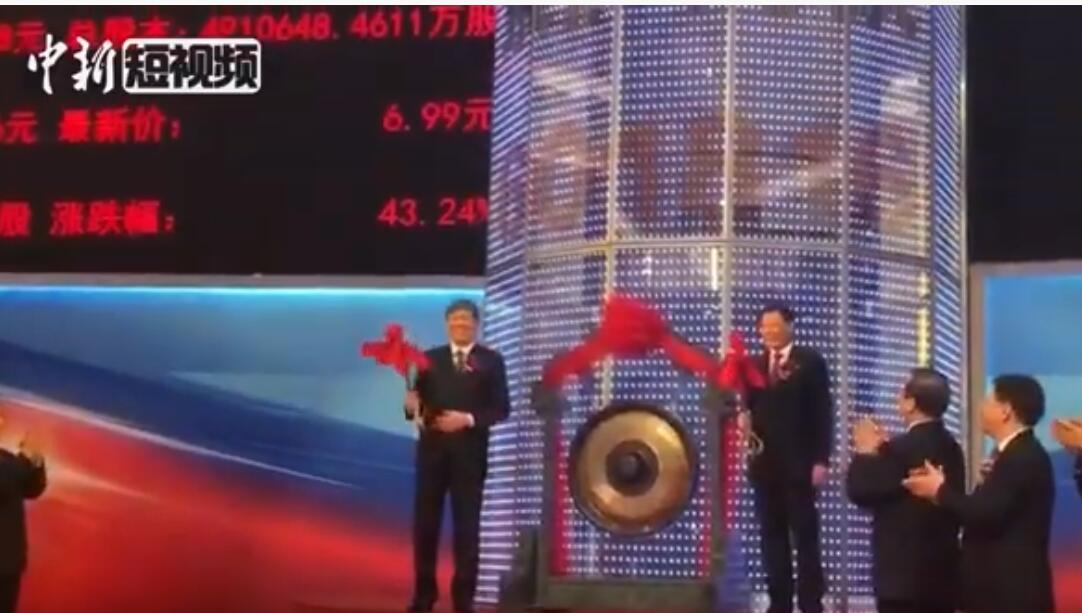
After the Cultural Revolution and Deng Xiaoping's rise to power in 1978, China re-opened to the outside world. The current Shanghai Stock Exchange was re-established on November 26, 1990, and began operations on December 19, 1990. It was under municipal control and termed an 'experimental point' until 1997, when the central government brought it under central control. In 2019, the SSE launched the STAR Market, featuring only technology-related companies, as a rival to the NASDAQ.
Reader's Guide
The Shanghai Stock Exchange holds significant importance as a pillar of China's financial system and a key player in global markets. As the world's third-largest stock market by market capitalization, it reflects China's economic growth and integration into the world economy. However, its operations are constrained by capital account controls and central government influence, limiting full foreign access. The exchange's history, from its 19th-century origins to its re-establishment in 1990, mirrors China's turbulent modern history, including foreign concessions, war, revolution, and economic reform. The SSE's structure includes A shares (priced in renminbi, restricted to domestic investors until reforms) and B shares (quoted in U.S. dollars, available to domestic and foreign investors). The Qualified Foreign Institutional Investor (QFII) program, launched in 2003, allows limited foreign trading in A shares. The exchange's legacy includes its role in China's socialist market economy, its resilience through closures and slumps, and its ongoing evolution, such as the 2019 STAR Market launch. The SSE remains a critical barometer for China's economic policies and global financial standing.
Did You Know?
- The Shanghai Stock Exchange is the world's third-largest stock market by market capitalization, exceeding $10.21 trillion in May 2026.
- The first share list in Shanghai appeared in June 1866.
- The exchange was re-established on November 26, 1990, and began operations on December 19, 1990.
- In 2019, the SSE launched the STAR Market, featuring only technology-related companies.
Roots in the International Settlement
The story of Shanghai's securities trading stretches back to the late 1860s, when the city's International Settlement—born from the Treaty of Nanking in 1842 and subsequent bilateral agreements—had cultivated the infrastructure needed for a share market. By June 1866, the first share list had appeared, and the environment was ripe: multiple banks operated, a legal framework for joint-stock companies existed, and established trading houses sought diversification beyond their traditional partnership structures. In the 1880s and 1890s, a mining-share boom prompted foreign businessmen to establish the Shanghai Sharebrokers' Association, widely regarded as China's first stock exchange. The association registered in Hong Kong in 1904 under the Companies Ordinance and adopted the name Shanghai Stock Exchange. Early trading was dominated by banks holding private shares, though by 1880 only Hong Kong and Shanghai local banks remained in that role. The supply of securities came primarily from local enterprises, and the market's character shifted after the 1895 Treaty of Shimonoseki opened treaty ports to foreign industrial investment.
Boom, Bust, and the Long Silence
The 1920s and 1930s brought a wave of consolidation and volatility. In 1920 and 1921, two additional venues—the Shanghai Securities & Commodities Exchange and the Shanghai Chinese Merchant Exchange—opened their doors, and by 1929 all three had merged into a single Shanghai Stock Exchange. Rubber plantations became the dominant force in trading from the second decade of the 20th century onward, and by the 1930s Shanghai had cemented its reputation as the Far East's financial hub, where Chinese and foreign participants traded stocks, debentures, government bonds, and futures. That era ended abruptly on December 8, 1941, when Japanese forces occupied the International Settlement and the exchange shut down. A brief resumption occurred in 1946, but the Communist revolution of 1949 closed the market for good. For nearly three decades, Shanghai had no functioning stock exchange. The timeline was punctuated by repeated crises—a 1871 speculative bubble, an 1883 credit crisis, a 1890 bank crisis originating in Hong Kong, and a 1914 closure during World War I—each testing the market's resilience.
Rebirth and the Road to Modernity
After Deng Xiaoping's rise to prominence and China's 1978 policy of reform and opening up, the securities landscape began to reassemble. Treasury bond trading resumed in 1981, and by 1984 company stocks and corporate bonds appeared in Shanghai and a handful of other cities. The present Shanghai Stock Exchange was formally re-established on November 26, 1990, with trading commencing on December 19 of that year. For its first seven years, the exchange operated under municipal authority as an experimental point. In 1997, the State Council transferred direct oversight to the China Securities Regulatory Commission, affirming the exchange's legitimate place within the socialist market economy. A four-year slump from 2001 to 2005 halved the market's value and prompted a temporary ban on new IPOs in April 2005 to facilitate the conversion of over $200 billion in state-owned equity into tradable shares. In 2019, the SSE launched the STAR Market, a dedicated board for technology companies positioned as a domestic counterpart to NASDAQ.
Scale, Structure, and the Capital-Control Question
As of May 2026, the Shanghai Stock Exchange ranks as the world's third-largest market by capitalization, surpassing $10.21 trillion, and stands as Asia's largest exchange. It operates alongside the Shenzhen Stock Exchange and the Beijing Stock Exchange as one of three independently functioning venues in mainland China. Despite its enormous scale, the SSE remains structurally distinct from markets like the Hong Kong Stock Exchange: it is not fully open to foreign investors, and its trading environment is frequently shaped by decisions made by the central government through capital account controls. The exchange is organized as a non-profit entity directly administered by the CSRC, a governance model that reflects Beijing's intent to keep capital markets aligned with broader economic policy. This blend of massive domestic liquidity and regulated external access defines the SSE's unique position in the global financial architecture.
Gallery
More in Stock Markets & Finance 1-18
Spotted an error? Know more?
This is a living reference — every entry is fact-audited, and reader corrections feed straight into our audit queue. Suggest an edit · See this site's audit record