
Share (finance)
A unit of equity ownership in a corporation's capital stock.

Wikipedia / Wikimedia Commons
A share—also called stock or equity—represents a single unit of ownership in a corporation’s capital stock. The term can also apply to units in mutual funds, limited partnerships, and real estate investment trusts. All of a company’s shares together make up its share capital. The person who owns shares is known as a shareholder or stockholder, and the share itself defines the ownership link between that individual and the company. Each share has a face value, which is its stated denominated amount; the total face value of all issued shares equals the company’s capital, though this figure may differ from the shares’ market value.
Income from share ownership comes in the form of dividends. Various types of shares exist, including equity shares, preference shares, deferred shares, redeemable shares, bonus shares, right shares, and shares issued under employee stock option plans.
**Terminology** - **Stock** and **equity** are common synonyms. - **Shares outstanding** are those authorized by the government, issued by the company, and held by third parties. - **Treasury shares** are authorized and issued but held by the company itself. - **Issued shares** equal the sum of shares outstanding and treasury shares. - **Shares authorized** include both issued shares (by the board or shareholders) and unissued shares that the company’s constitutional documents permit.
**Valuation** Shares are valued based on different principles across markets, but a core idea is that a share is worth the price at which a sale would likely occur. Market liquidity heavily influences whether a share can be sold at a given time. An actual sale between buyer and seller is generally seen as the best immediate market indicator of a share’s “true value” at that moment. When valuing a minority stake (less than 50%), a minority discount is typically applied, since such ownership gives limited control over the business if a majority shareholder exists.
**Tax treatment** How dividends are taxed varies by jurisdiction. In India, for example, dividends are tax-free for the shareholder up to ₹1 million, but the paying company must pay a dividend distribution tax of 12.5%. A “deemed dividend” exists, which is not tax-free. Indian tax laws also include rules to prevent dividend stripping.
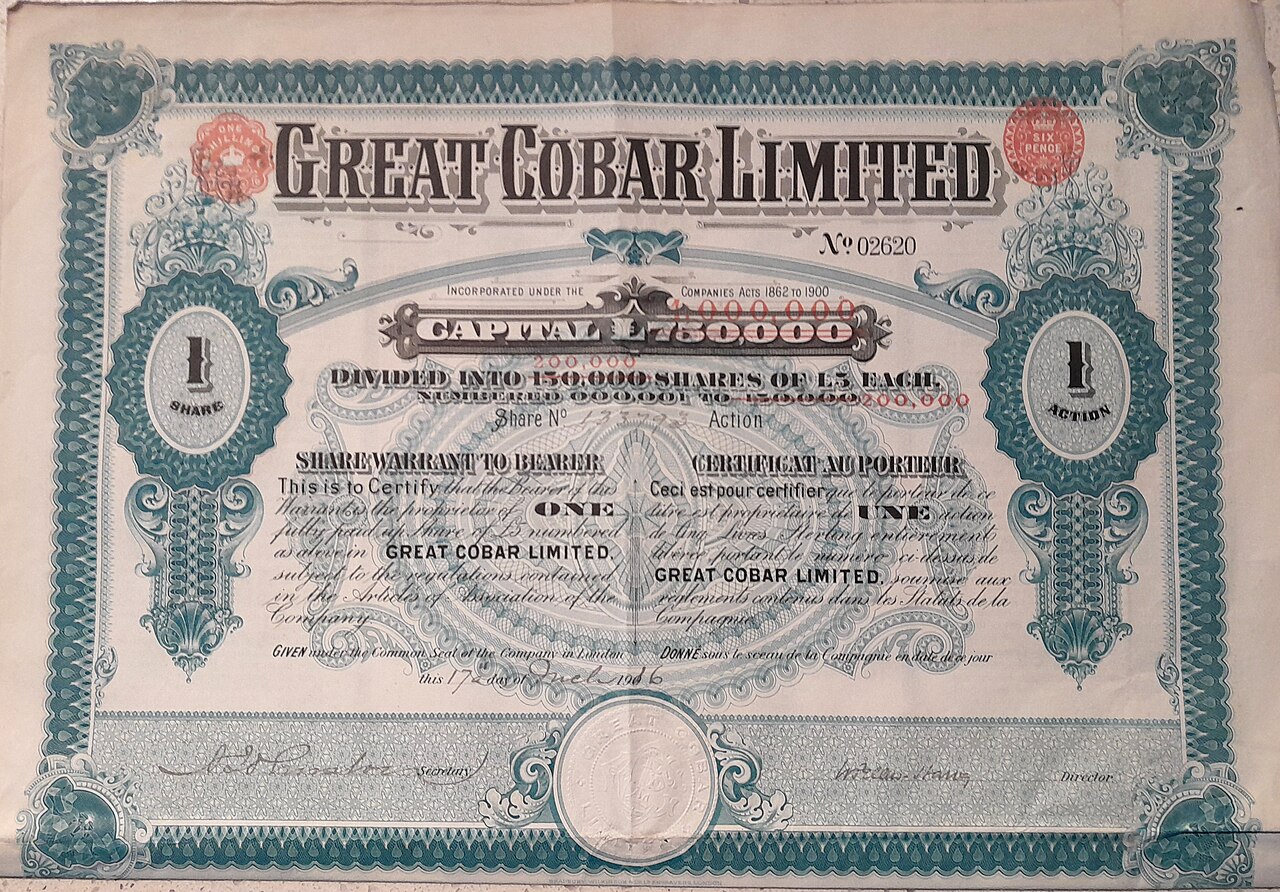
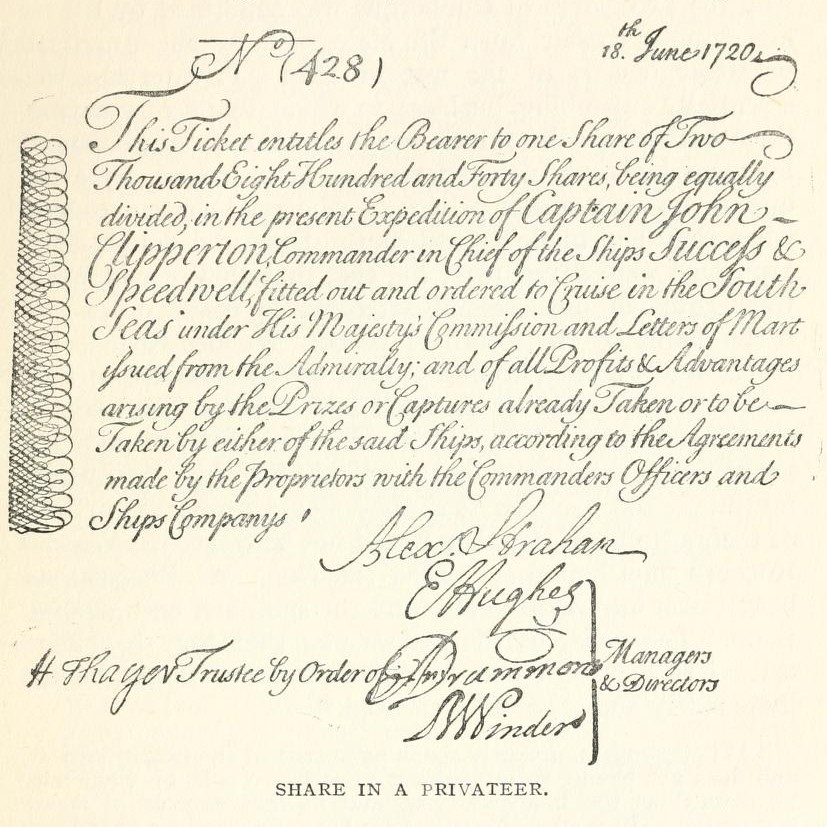
**Share certificates** In the past, investors received physical share certificates as proof of
- Definition
- Unit of equity ownership in the capital stock of a corporation
- Types
- Equity shares, preference shares, deferred shares, redeemable shares, bonus shares, right shares, employee stock option plan shares
- Income from shares
- Dividend
- Key terms
- Shares outstanding, treasury shares, issued shares, shares authorized
- Valuation basis
- Price at which a transaction would likely occur
- Tax treatment example
- In India, dividends tax-free up to INR 1 million; company pays dividend distribution tax at 12.5%
- Modern record-keeping
- Electronic systems such as CREST or DTCC
Lore & Background
Shares represent ownership in a corporation, with the shareholder holding a proportional claim on the company's assets and earnings. The face value of a share is its denominated value, but the market value may differ. Different types of shares exist, including equity shares, preference shares, deferred shares, redeemable shares, bonus shares, right shares, and employee stock option plan shares. Income from shares is received as dividends, and tax treatment of dividends varies by jurisdiction; for example, in India, dividends are tax-free up to INR 1 million for the shareholder, but the company pays a dividend distribution tax of 12.5%.
Reader's Guide
Shares are fundamental to corporate finance, representing ownership and enabling capital raising. The distinction between shares outstanding, treasury shares, issued shares, and authorized shares is critical for understanding a company's capital structure. Valuation of shares is based on the price at which a transaction would likely occur, with liquidity being a major factor. A minority discount is applied when valuing a shareholding of less than 50%, reflecting limited control. Historically, share certificates were issued as evidence of ownership, but modern systems like CREST or DTCC record ownership electronically. Legal disputes, such as the U.S. Supreme Court case Slack Technologies, LLC v. Pirani, continue to shape the interpretation of securities laws regarding share registration and traceability. The concept of deemed dividends and anti-stripping provisions in tax law further illustrate the complexity of share-related regulation.
Did You Know?
- The total of the face value of issued shares represents the capital of a company, which may not reflect the market value of those shares.
- Treasury shares are shares that are authorized, issued, and held by the company itself.
- A minority discount is usually applied when valuing a minority shareholding (less than 50%).
- In India, the company paying a dividend must pay dividend distribution tax at 12.5%.
The Anatomy of Ownership
A share, also called stock or equity, represents a unit of ownership in a corporation's capital stock. This concept extends beyond traditional companies to include mutual funds, limited partnerships, and real estate investment trusts. The person holding these units is known as a shareholder or stockholder, and the share itself formalizes the ownership relationship between the enterprise and its investors. Each unit carries a denominated face value, and when you add up the face values of all issued shares, you arrive at the company's stated capital. However, this accounting figure often bears little resemblance to what the market actually values those shares at. The income generated by holding shares takes the form of dividends. The landscape of share types is diverse: equity shares, preference shares, deferred shares, redeemable shares, bonus shares, right shares, and employee stock option plan shares each carry distinct rights and characteristics within the broader ownership structure.
Classifying the Share Universe
The vocabulary surrounding shares reveals a layered taxonomy that matters to anyone calculating ownership or control. Shares outstanding are those that have been authorized by the government, issued by the company, and are currently held by third parties. Treasury shares, by contrast, are authorized and issued but retained by the company itself rather than distributed to outside investors. Issued shares represent the combined total of outstanding and treasury shares. At the broadest level, shares authorized encompass both those already issued by the board of directors or shareholders and those that remain unissued but are permitted under the company's constitutional documents. This hierarchy matters because it distinguishes between what a company has actually put into circulation and what it is legally permitted to do in the future. The distinction between issued and outstanding shares, for example, directly affects calculations of ownership percentages and the practical control a shareholder wields over corporate decisions.
Pricing and the Question of True Value
Determining what a share is worth involves principles that shift across different markets, yet a foundational idea remains: a share's value is essentially the price at which a transaction would likely occur if the shares were put up for sale. Market liquidity plays a critical role in this equation, since it determines whether a share can actually be sold at any given moment. When a real transaction takes place between a buyer and a seller, that completed sale is generally regarded as the strongest prima facie indicator of the shares' true value at that specific point in time. A particularly important nuance arises with minority holdings. When a shareholder owns less than fifty percent of a company, a minority discount is typically applied during valuation. The reasoning is straightforward: holding a minority stake offers limited control over the business, especially when a majority shareholder holds the balance of power. This discount acknowledges that the economic reality of a small stake differs meaningfully from proportional ownership of the whole enterprise.
Taxation, Tracing, and the Paper Trail
The fiscal treatment of share ownership varies considerably across jurisdictions. In India, for example, dividends received by a shareholder are tax-free up to one million rupees, while the company distributing those dividends must pay a dividend distribution tax at a rate of twelve and a half percent. Indian law also recognizes the concept of a deemed dividend, which does not enjoy the same tax-free status, and includes specific provisions designed to prevent dividend stripping. On the regulatory front, questions about tracing shares have reached the highest courts. As of May 2022, the United States Supreme Court was weighing the case of Slack Technologies, LLC v. Pirani, which centered on whether Sections 11 and 12(a)(2) of the Securities Act of 1933 require plaintiffs to demonstrate that they acquired shares traceable to the registration statement they alleged was misleading. Historically, ownership was evidenced through physical share certificates, but modern practice increasingly relies on electronic recording systems such as CREST or DTCC, a central securities depository, to track who holds what.
Gallery



More in Stock Markets & Finance 1-18
Spotted an error? Know more?
This is a living reference — every entry is fact-audited, and reader corrections feed straight into our audit queue. Suggest an edit · See this site's audit record