Tokyo Stock Exchange
Major Japanese stock exchange, owned by Japan Exchange Group.

Wikipedia / Wikimedia Commons
The Tokyo Stock Exchange (TSE), also known as Tosho or TYO, is a stock exchange in Tokyo, Japan. It is owned by Japan Exchange Group (JPX)—a holding company in which the exchange itself lists shares—and is run by Tokyo Stock Exchange, Inc., a fully owned JPX subsidiary. JPX was created from the merger of the Tokyo Stock Exchange Group and the Osaka Securities Exchange, a process that began in July 2012 after approval from the Japan Fair Trade Commission, and officially launched on January 1, 2013.
The TSE operates as a joint-stock company with nine directors, four auditors, and eight executive officers. Its headquarters are at 2-1 Nihonbashi-Kabutochō, Chūō, Tokyo, in Japan’s largest financial district. Key indices tracking the exchange include the Nikkei 225, selected by the Nihon Keizai Shimbun; the TOPIX, based on share prices of Prime companies; and the J30, maintained by major Japanese broadsheet newspapers. The exchange also has active bond and futures markets. Ninety-four domestic and ten foreign securities companies participate in TSE trading.
The exchange’s press club, the Kabuto Club, meets on the third floor of the TSE building. Most members come from the Nihon Keizai Shimbun, Kyodo News, Jiji Press, or business broadcasters like Bloomberg LP and CNBC. The club is busiest in April and May, when public companies release annual accounts.
Normal trading sessions run from 9:00 a.m. to 11:30 a.m. and 12:30 p.m. to 3:30 p.m., Monday through Friday, excluding Saturdays, Sundays, and pre-announced holidays. These holidays include New Year’s Day, Coming of Age Day, National Foundation Day, Vernal Equinox Day, Shōwa Day, Constitution Memorial Day, Greenery Day, Children’s Day, Marine Day, Respect for the Aged Day, Autumnal Equinox, Health and Sports Day, Culture Day, Labour Thanksgiving Day, and the Emperor’s Birthday.
Until April 4, 2022, corporate shares were listed in five market sections: the First Section (large companies, dating to 1949), the Second Section (mid-sized companies, from 1961), JASDAQ (emerging companies, established 1991, absorbed into TSE in 2013), Mothers (high-growth and emerging stocks, from 1999), and the TOKYO PRO Market (small companies, launched in 2009 with the London Stock Exchange as Tokyo AIM). As of March 31, 2022, there were 3,821 listed companies.
From April 4, 2022, the market was restructured into Prime, Standard, a
- established
- May 15, 1878
- location
- 2-1 Nihonbashi-Kabutochō, Chūō, Tokyo, Japan
- owner
- Japan Exchange Group (JPX)
- known_for
- Nikkei 225, TOPIX, and J30 indices; largest financial district in Japan
- market_restructuring
- April 4, 2022 (Prime, Standard, Growth markets)
Lore & Background
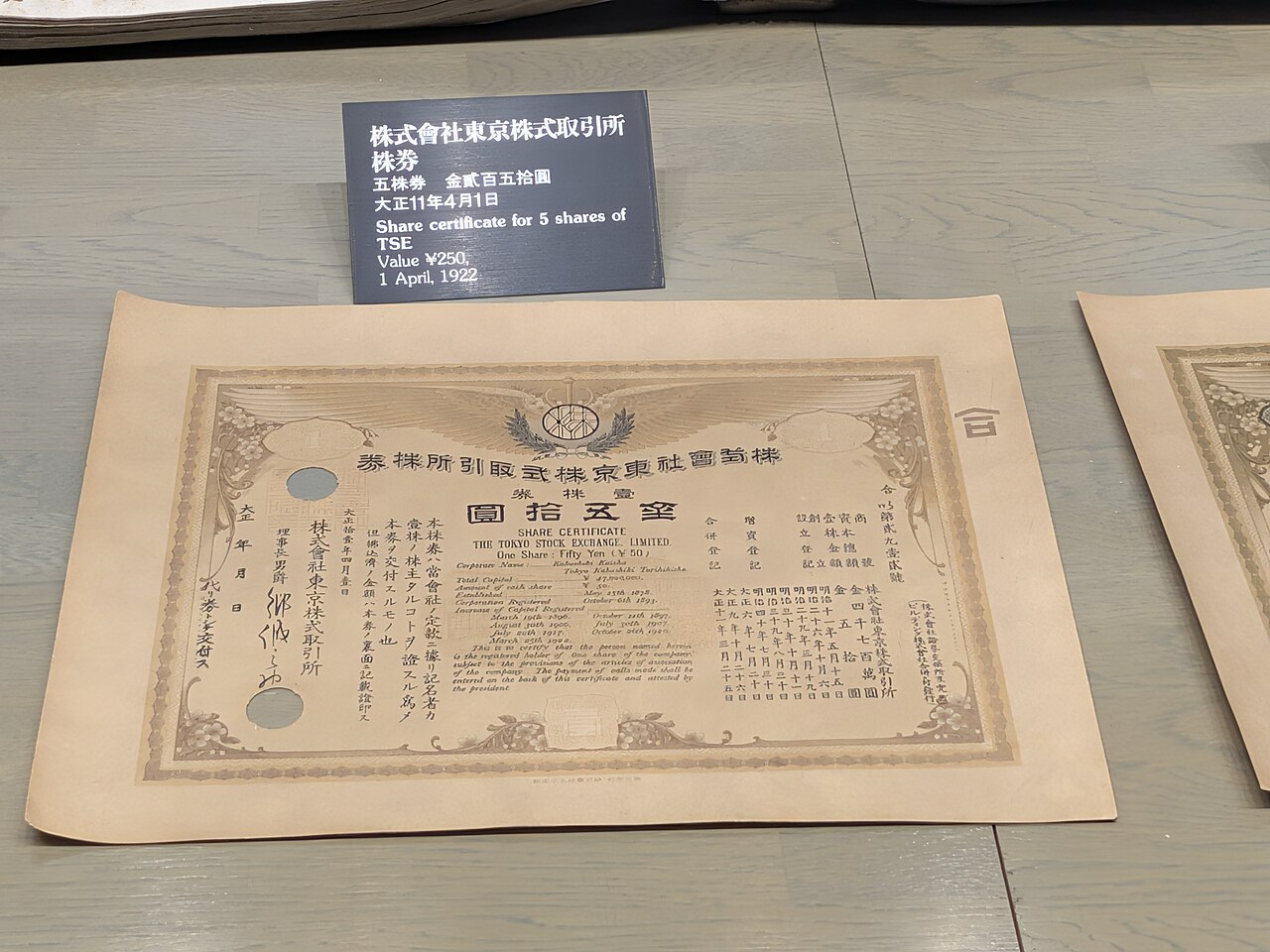
The Tokyo Stock Exchange was established on May 15, 1878, as the Tokyo Kabushiki Torihikijo under the direction of Finance Minister Ōkuma Shigenobu and capitalist advocate Shibusawa Eiichi. Trading began on June 1, 1878. In 1943, it was combined with eleven other stock exchanges to form a single Japanese Stock Exchange, which was shut down on August 1, days before the bombing of Hiroshima. The exchange reopened under its current Japanese name on May 16, 1949, pursuant to the new Securities Exchange Act.
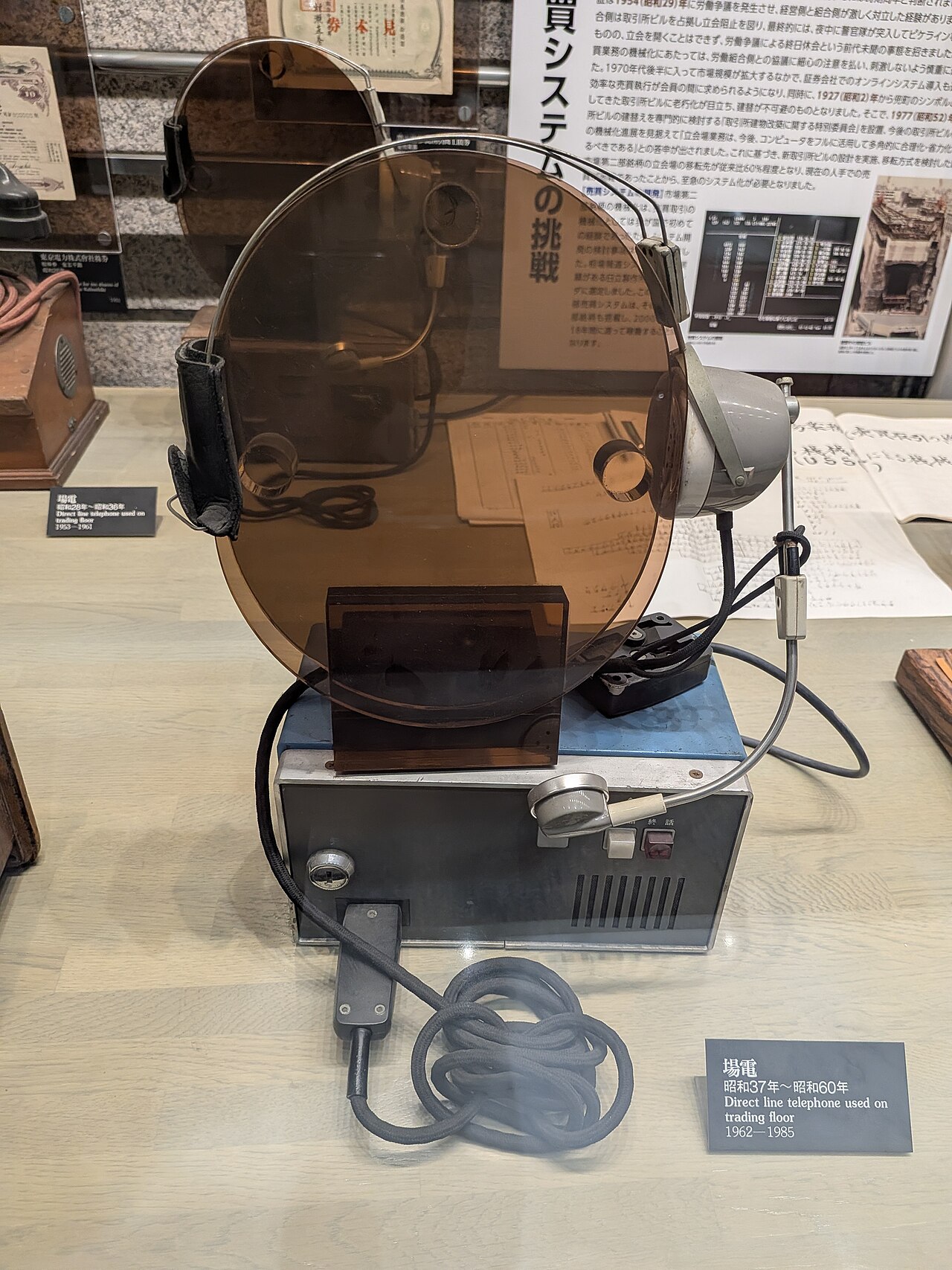
The TSE runup from 1983 to 1990 was unprecedented; in 1990 it accounted for over 60% of the world's stock market capitalization before falling precipitously in value and rank. The current TSE building opened on May 23, 1988, and the trading floor closed on April 30, 1999, for a switch to electronic trading. A new facility, TSE Arrows, opened on May 9, 2000, and in 2010 the exchange launched its Arrowhead trading facility. In 2001, the TSE restructured itself as a kabushiki gaisha.
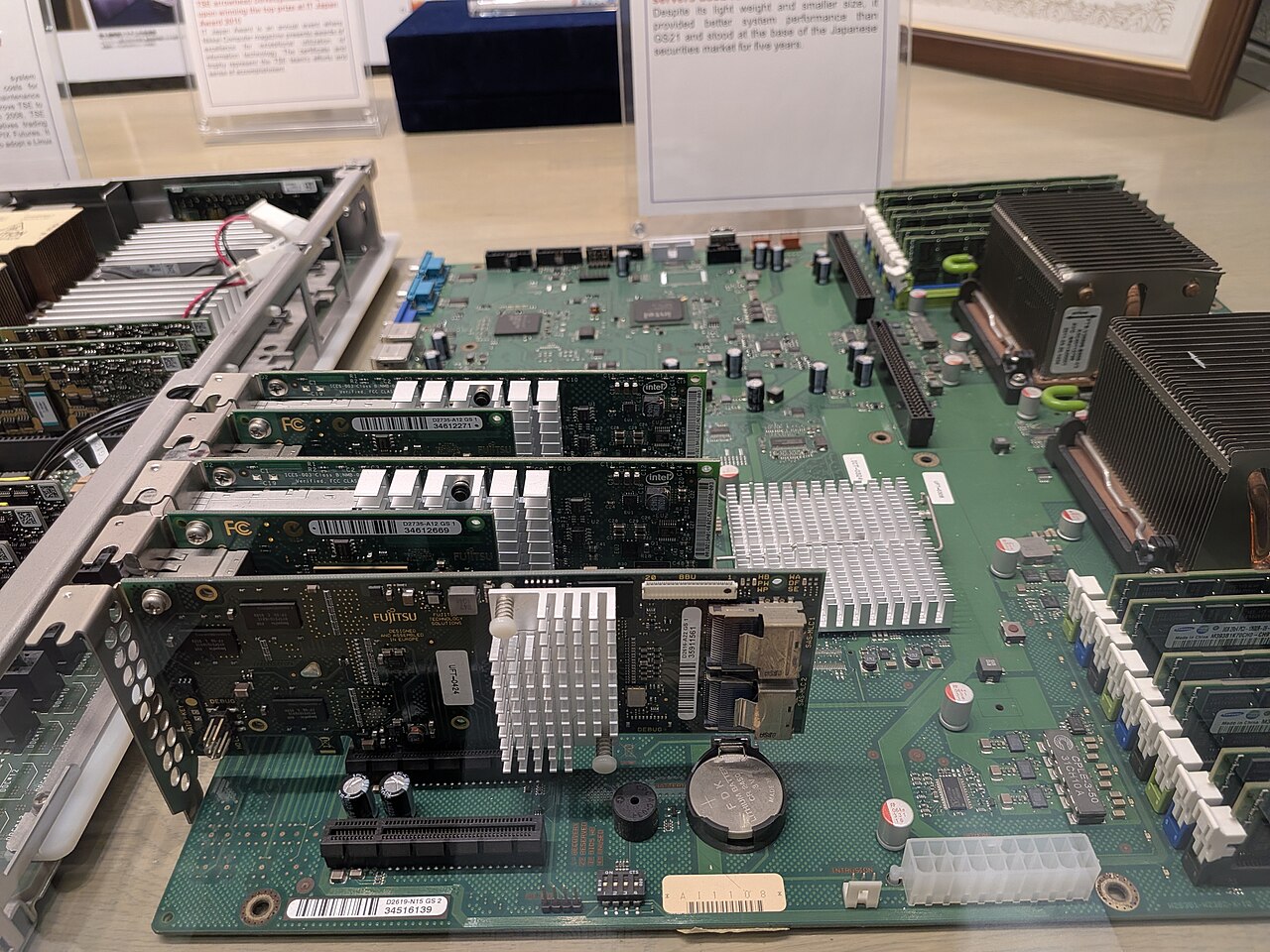
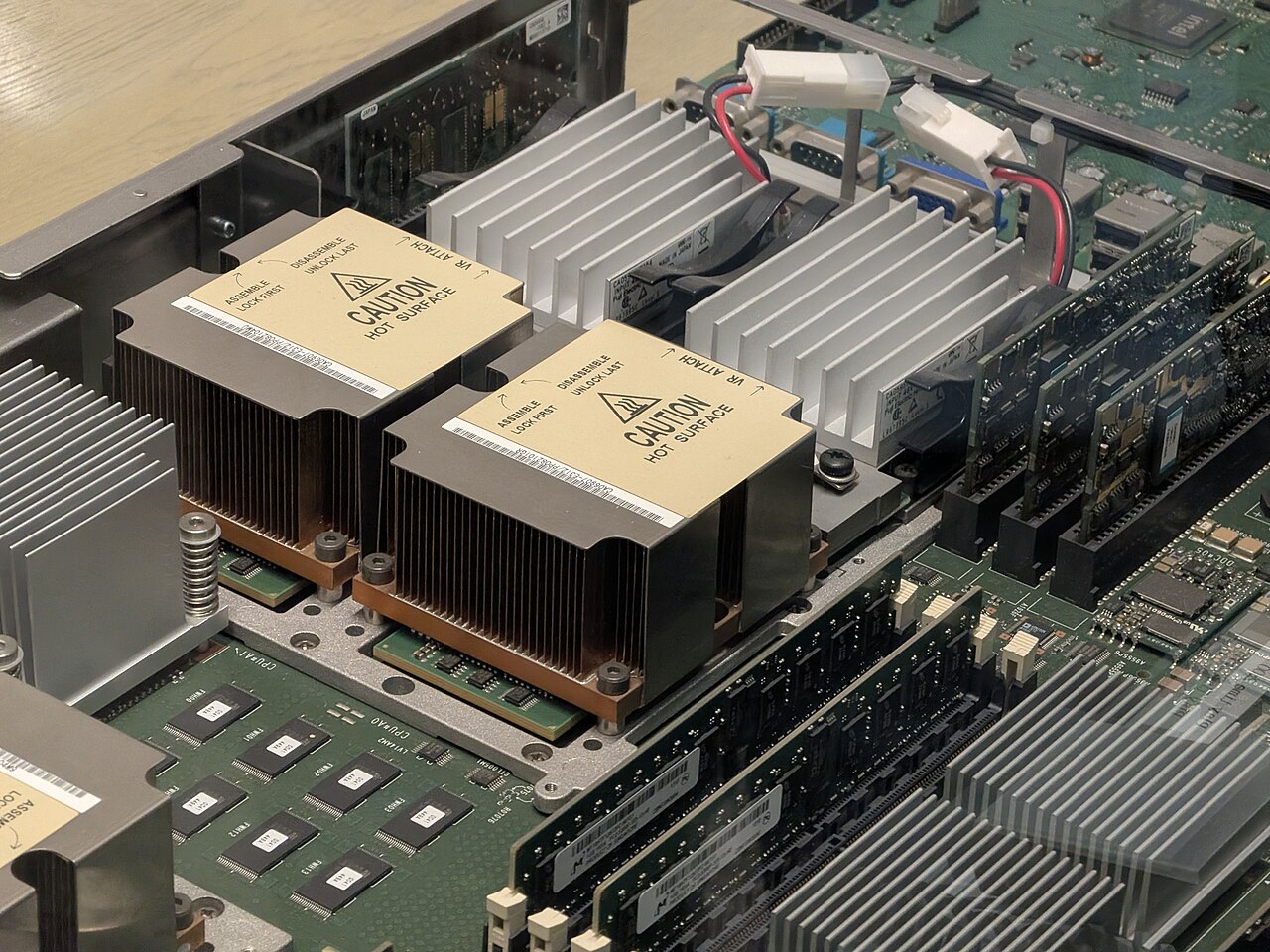
The exchange experienced notable technology problems, including a 90-minute trading halt on November 1, 2005, due to bugs in a Fujitsu system, and a full-day suspension on October 1, 2020, due to a technical glitch in the system for relaying market information. Other incidents include the Mizuho Securities error in December 2005, where a mistaken order led to a net loss of US$347 million, and the resignation of CEO Takuo Tsurushima and two other senior executives over the affair.
Reader's Guide
The Tokyo Stock Exchange is a cornerstone of global finance, particularly influential during Japan's economic rise in the late 20th century. Its indices—Nikkei 225, TOPIX, and J30—are widely tracked benchmarks. The exchange's restructuring in April 2022 into Prime, Standard, and Growth markets aimed to improve liquidity and corporate governance. Its history includes early establishment under Meiji-era leaders, wartime consolidation, and postwar resurgence. The exchange's technological challenges, such as the 2005 and 2020 trading halts, highlight the critical nature of reliable trading systems. The TSE's press club, the Kabuto Club, and its role in hosting major IPOs underscore its centrality to Japanese business. The merger that formed JPX in 2013 reflects ongoing consolidation in global exchanges. Despite past glitches, the TSE remains a key venue for domestic and foreign securities companies, with 3,899 companies listed as of August 21, 2023.
Did You Know?
- The Tokyo Stock Exchange was established on May 15, 1878, and trading began on June 1, 1878.
- In 1990, the TSE accounted for over 60% of the world's stock market capitalization.
- On October 1, 2020, the TSE suspended trading in all shares for a whole day due to a technical glitch.
- The exchange's press club, the Kabuto Club, meets on the third floor of the TSE building.
Origins and the Long Arc of Japanese Capital Markets
The Tokyo Stock Exchange traces its roots to May 15, 1878, when it was founded as the Tokyo Kabushiki Torihikijo under the guidance of Finance Minister Ōkuma Shigenobu and the influential capitalist Shibusawa Eiichi. Trading commenced just two weeks later, on June 1. For decades the exchange operated as a cornerstone of Japan's emerging financial system, but wartime consolidation disrupted that continuity. In 1943, the TSE was merged with eleven other city exchanges into a single entity called the Japanese Stock Exchange, which was then shut down on August 1, 1945—days before the Hiroshima bombing. The exchange was reborn on May 16, 1949, under its current name and a new Securities Exchange Act. The postwar era brought extraordinary growth: between 1983 and 1990, the TSE experienced a runup so dramatic that by 1990 it represented over 60 percent of global stock market capitalization, making it the world's largest exchange by that measure. The subsequent collapse saw it fall to roughly the fourth-largest position worldwide.
The 2022 Market Restructuring
For decades, the TSE organized listed companies into a patchwork of five sections: the First Section (established in 1949 for large firms), the Second Section (1961, mid-sized firms), JASDAQ (1991, later absorbed from Osaka), Mothers (1999, high-growth and emerging stocks), and TOKYO PRO Market (2009, a joint venture with the London Stock Exchange modeled on its AIM). By March 31, 2022, these sections housed 3,821 companies. On April 4, 2022, this entire architecture was replaced by three new divisions—Prime, Standard, and Growth—differentiated by liquidity, corporate governance standards, and other criteria. Companies had voluntarily chosen their new placement between September and December 2021, with results announced on January 11, 2022. Of the former First Section, 1,841 firms moved to Prime and 344 to Standard. All 474 Second Section companies, 658 JASDAQ Standard firms, and 424 Mothers companies were slotted into Standard, while 36 JASDAQ Growth firms joined the Growth tier. By August 21, 2023, the total listed count had grown to 3,899.
Corporate Governance and the JPX Era
The TSE is incorporated as a kabushiki gaisha—Japan's equivalent of a joint-stock company—with a board of nine directors, four auditors, and eight executive officers. Its headquarters sit at 2-1 Nihonbashi-Kabutochō in Chūō, Tokyo, the country's largest financial district. Ownership rests with Japan Exchange Group (JPX), a holding company that itself trades on the TSE under ticker 8697. JPX came into existence on January 1, 2013, after the Japan Fair Trade Commission approved the merger of Tokyo Stock Exchange Group with Osaka Securities Exchange in July 2012. The operating entity, Tokyo Stock Exchange, Inc., is a wholly owned subsidiary of JPX. The exchange's corporate form itself evolved: in 2001 it converted from an incorporated association, where members held shares, into a kabushiki gaisha. Internationally, the TSE has pursued strategic partnerships, including a $303 million purchase of a 4.99 percent stake in Singapore Exchange in June 2007 and a joint venture with the London Stock Exchange to create the Tokyo-based TOKYO PRO Market in 2008.
Trading Floor to Digital Infrastructure
The physical trading floor of the TSE, housed in the building opened on May 23, 1988 to replace the 1931 structure, was permanently closed on April 30, 1999, as the exchange transitioned all transactions to electronic systems. A successor facility, TSE Arrows, opened on May 9, 2000, and in 2010 the exchange launched its Arrowhead trading platform. Normal trading sessions run from 9:00 to 11:30 a.m. and 12:30 to 3:30 p.m., closed on weekends and national holidays ranging from New Year's Day to the Emperor's Birthday. Ninety-four domestic and ten foreign securities firms participate in trading. The exchange also hosts active bond and futures markets, and its key indices include the Nikkei 225 (curated by Nihon Keizai Shimbun), TOPIX (tracking Prime-listed share prices), and the J30. The press environment centers on the Kabuto Club on the third floor, where journalists from Nihon Keizai Shimbun, Kyodo News, Jiji Press, Bloomberg, and CNBC gather, with activity peaking in April and May during annual earnings season. Not all technological transitions were smooth: on November 1, 2005, a newly installed Fujitsu-built system suffered bugs that limited operations to just 90 minutes.
Gallery
More in Stock Markets & Finance 1-18
Spotted an error? Know more?
This is a living reference — every entry is fact-audited, and reader corrections feed straight into our audit queue. Suggest an edit · See this site's audit record